Agricultural Drones, Thermal Drone Services
The Ultimate Guide to Night Drone Operations Using Infrared: Equipment Checklist, Safety Essentials, and Pro Tips
Jul
Night operations push your skills. You rely less on visual cues and more on sensors, maps, and preparation. Every time I run a night flight, I’m reminded how much sharper and more disciplined it makes you as a pilot. It’s not easy—but it’s worth it.
Why Fly at Night?
Night missions with thermal drones offer better contrast and clearer thermal differentiation, especially in low ambient temperatures. They’re ideal for infrastructure inspections, detecting heat leaks, or spotting abnormal hotspots. But flying at night means tighter tolerances and less room for error. That’s where the prep matters.
Night Ops Gear Checklist
Here’s what I typically bring into the field for night flights:
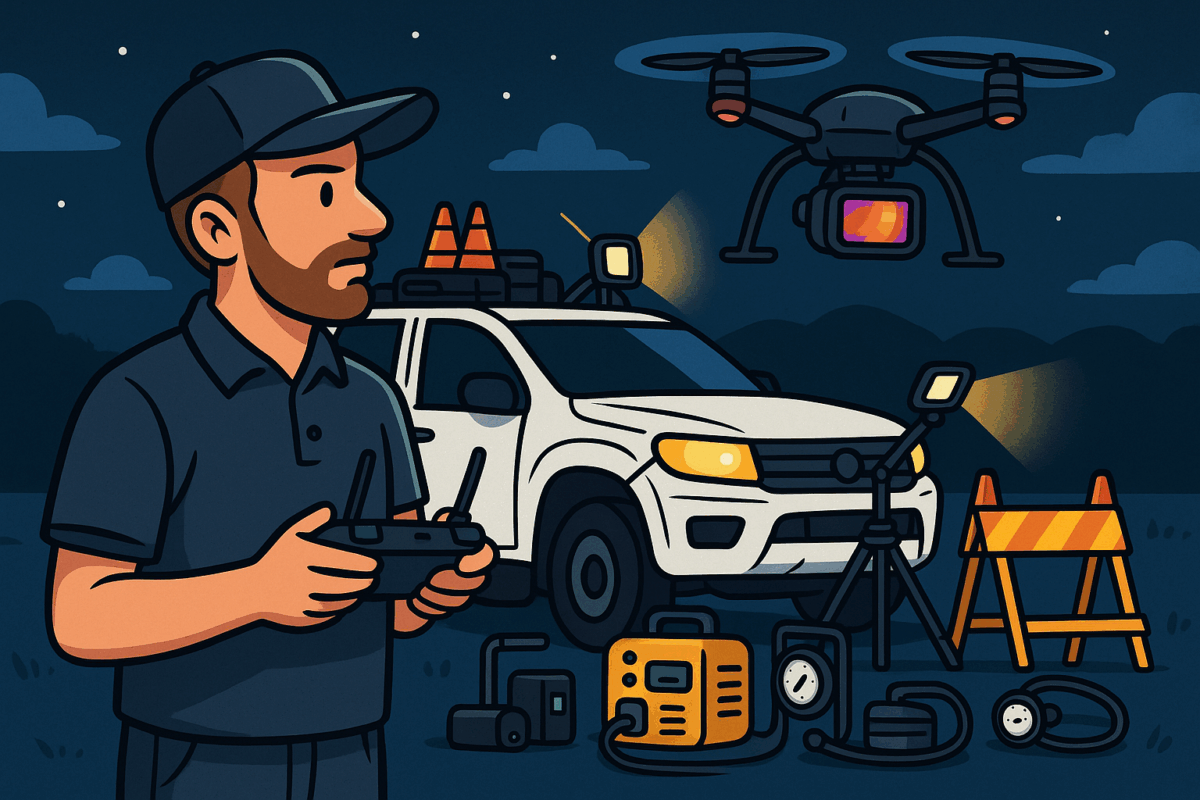
- Infrared drone platform – Fully charged, with pre-flight calibration complete.
- Multiple battery sets – For two drones, I carry three full sets. This allows parallel work or handovers between locations.
- Battery chargers and power boards – All running at once, RCD-protected. Power redundancy is non-negotiable.
- Clamp lights and floodlights – Small, bright units that attach to vehicles or tripods. Essential for safe field work.
- Portable generator – Powers lights, chargers, and backup comms. I bring a multi-outlet system with surge protection.
- Tyre inflator and flat kit – I’ve had to air up on-site more than once. Always worth having.
- Cones and foldable barriers – Keeps foot traffic and vehicles out of your launch zone.
- Power banks and USB lights – Handy for tablets, radios, and quick lighting on the go.
Lessons from the Field
One thing I’ve learned: if you forget a small item like a clamp light or RCD, you’ll feel it fast. A few weeks back, I had to handhold a light for half the mission—won’t make that mistake again. Every part of the setup serves a purpose, even if it feels minor at first.
Thermal drones perform well at night, but only if you respect the workflow. That means sticking to a clear plan, checking all sensors and firmware updates, and testing lights and power before departure.
Building Skill Under Pressure
At night, you’re flying blind unless your systems are solid. You’re forced to trust your planning, read the telemetry, and watch your power consumption closely. This is where pilots level up—when conditions don’t allow autopilot habits.
I’ve had sessions where I ran two setups from separate locations, coordinated via UHF, and regrouped with overlapping power windows. It’s doable—but only if the prep’s done right.
Final Thoughts
Night drone work isn’t for everyone. But if you’re serious about becoming a better pilot, and want to get the most from your thermal imaging system, this is the training ground. Every mission teaches you something. The gear evolves, your habits sharpen, and your confidence grows.
Want a demo or to see one in action??
We’ve got DJI M3 multispectral drones available now, and we’re always up for a chat about what’s possible when tech meets agriculture.
Or buy directly below. 👇
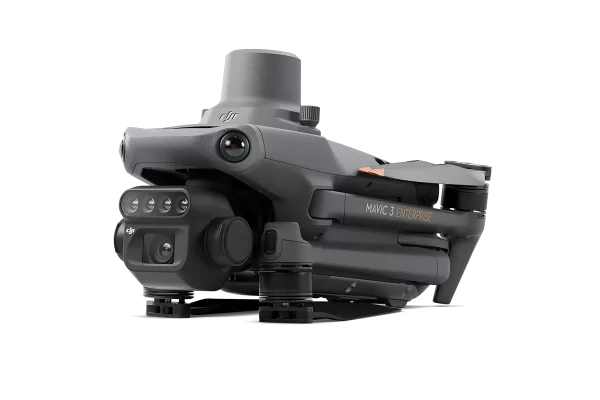
DJI Mavic 3 Enterprise Multispectral 3M
The DJI Mavic 3 Multispectral (M3M) is a compact drone designed for precision agriculture, environmental monitoring, and high-accuracy surveying. It integrates a 20MP RGB camera with four 5MP multispectral cameras, enabling detailed analysis of vegetation health and crop conditions.
Agricultural Applications
Field Scouting: Real-time detection of crop anomalies such as emergence deficiencies, weed pressure, and lodging.
Orchard Mapping: Terrain-follow aerial surveying, tree counting, and 3D route generation using DJI Terra or DJI SmartFarm Platform.
Variable Rate Application: Generation of prescription maps for targeted spraying and fertilization based on vegetation indices.
